The Contract is the First Construction Site: Negotiating Key Terms

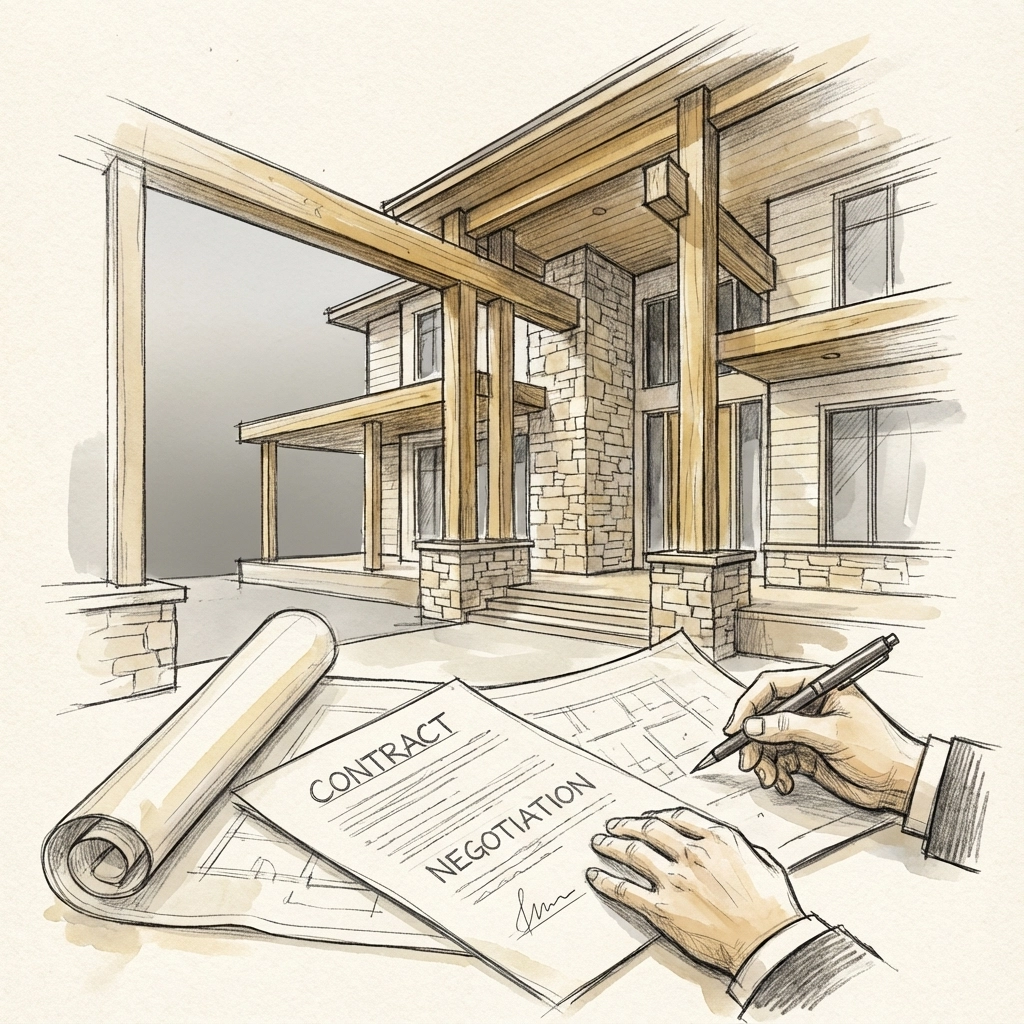
Your contract is the first construction site, long before the first shovel hits the ground. Understanding that the contract is the first construction site means recognizing you’re building the foundation of cost control, project oversight, and decision-making authority through negotiation. Most luxury homeowners in South Florida discover too late that their signed agreement either protects their interests or leaves them vulnerable to six-figure surprises.
The stakes are particularly high for $2M-$10M custom builds, where contract terms directly impact everything from material quality to timeline control. Many builders present their agreements as non-negotiable standards, hoping busy executives will simply sign and move forward. That’s rarely the truth.
Why the Contract is First Construction Site for Your Build

When builders claim their contracts are “standard industry documents” that can’t be modified, they’re usually referring to AIA (American Institute of Architects) forms or similar templates. While these provide solid legal frameworks, the critical terms, payment schedules, allowances, change order procedures, and owner rights, remain completely negotiable.
The most successful negotiations focus on five key areas where builders typically have flexibility:
Site Access and Communication Rights
Establish your ability to visit the construction site during reasonable business hours. Many contracts restrict owner access to “scheduled appointments only,” which limits your ability to monitor progress and catch problems early. Confirm you have access to the site during reasonable hours without requiring advance permission.
Subcontractor Communication
Request the right to speak directly with subcontractors when questions arise about their specific work. This doesn’t mean micromanaging, but ensures you can get technical answers about waterproofing, electrical systems, or millwork details, especially critical for South Florida’s climate-specific requirements.
Vendor Transparency
Negotiate access to vendor pricing and material receipts, especially in cost-plus arrangements. This transparency helps verify that markup calculations are accurate and that you’re receiving credit for any trade discounts or rebates.
Change Order Definition
Define exactly what constitutes a change order and establish how each will be priced. Vague language like “owner-requested modifications” can turn routine clarifications into expensive additions.
Material Substitution Controls
Remove or modify clauses allowing “equivalent” materials without your approval. These provisions often lead to finish downgrades that compromise your home’s value. Beware of material substitution clauses that allow cheaper equivalents without your explicit approval.
Essential Strategies When Contract is the First Construction Site

Successful negotiation requires understanding what builders truly need versus what they prefer. Most builders prioritize predictable cash flow, clear scope definition, and protection from client-driven delays. You can address their concerns while securing the protections you need.
Payment Structure Alignment
Instead of fighting standard draw schedules, focus on tying payments to specific, measurable milestones. This protects both parties by ensuring funds flow only when work is substantially complete and approved.
Quality Assurance Integration
Rather than demanding unlimited site access, propose structured inspection points at key phases: foundation completion, framing, rough mechanicals, and pre-drywall. This gives you oversight without disrupting daily operations.
Documentation Standards
Request that significant decisions and approvals be documented in writing, including email confirmations of verbal discussions. This prevents misunderstandings about selections, timing, and responsibility.
Red Flags in Your Contract Terms
During your contract review, highlight discretionary phrases that give builders unilateral decision-making power. Language like “builder’s sole judgment,” “reasonable time,” or “industry standard” creates ambiguity that typically favors the contractor when disputes arise.
Pay particular attention to dispute resolution clauses. Confirm the dispute resolution method, litigation versus arbitration. While arbitration can be faster than litigation, some arbitration provisions limit your ability to recover attorney’s fees or restrict the types of damages you can claim. In South Florida’s luxury market, where construction defects can create substantial property value impacts, these limitations can be costly.

Escalation and Delay Provisions
Review how the contract handles material price increases and schedule delays. Review escalation clauses, delay provisions, and cancellation terms carefully. Some builders include automatic escalation clauses that pass all cost increases to owners, while others define force majeure events so broadly that normal supply chain delays become your responsibility.
Warranty and Liability Terms
Examine warranty periods and what specific systems are covered. Many standard contracts provide minimal warranties on waterproofing and windows, components critical to South Florida homes where hurricane damage and water intrusion create expensive remediation costs.
Due Diligence Checklist
Highlight Discretionary Phrases
Mark any language like “builder’s sole judgment” or “reasonable time” that creates ambiguity. These phrases typically favor the contractor when disputes arise.
Confirm Dispute Resolution Method
Verify whether the contract requires litigation or arbitration, and whether it must occur locally or allows for proceedings in other jurisdictions. This becomes particularly important if your builder operates across multiple states.
Review Escalation Clauses
Examine all provisions related to material costs and labor pricing. In today’s volatile construction market, some builders include provisions that automatically pass through all cost increases without caps or owner approval requirements.
Verify Financial Protection
Confirm the builder’s bonding capacity and insurance coverage levels. Your contract should require adequate liability insurance and payment bonds that protect you from subcontractor liens and performance failures.
Request Cost Records Access
Define your right to review vendor lists and cost records. Transparency only works if you can actually verify the information being provided, especially for cost-plus contracts.
Final Thoughts
Remember that the contract is the first construction site where you establish control, transparency, and quality standards. You may not secure every requested modification, but the negotiation process itself sets expectations for how decisions will be handled throughout the project. Builders who welcome reasonable requests for transparency demonstrate their commitment to professional collaboration.
Your contract represents your first and most important opportunity to establish the foundation for a successful build that meets your vision, timeline, and budget expectations. By approaching this process strategically and focusing on terms that matter most, you protect your investment from the start.
Consider engaging an independent construction advisor familiar with luxury home contracts to review your agreement before signing. The asking sets expectations: and asking informed questions establishes you as a serious client who deserves serious attention.
Frequently Asked Questions
Why is the contract considered the first construction site?
The contract is the first construction site because it establishes the foundation for cost control, project oversight, and decision-making authority before any physical work begins. Just as a poorly built foundation causes structural problems, poorly negotiated contract terms create financial and operational issues throughout construction.
What contract terms should I focus on when negotiating?
Focus on site access rights, change order definitions, material substitution controls, vendor transparency, and dispute resolution methods. These terms directly impact your ability to monitor quality, control costs, and resolve issues. Also verify payment milestone definitions and warranty coverage for climate-critical components like waterproofing.
Are builder contracts really negotiable or just standard forms?
While many builders use AIA or standard templates as starting points, key terms remain negotiable including payment schedules, allowances, change order procedures, owner access rights, and material substitution clauses. Builders who claim contracts are completely non-negotiable often prove difficult partners during construction.
Should I hire an attorney to review my construction contract?
Yes, especially for $2M-$10M projects. An attorney familiar with luxury home contracts can identify problematic clauses, suggest protective modifications, and ensure dispute resolution terms favor your interests. The cost of professional review is minimal compared to financial exposure from poorly negotiated terms.
What are red flag phrases to watch for in construction contracts?
Watch for discretionary language like “builder’s sole judgment,” “reasonable time,” “industry standard,” or “equivalent materials.” These phrases create ambiguity that typically favors contractors in disputes. Also examine broad force majeure definitions and automatic cost escalation clauses without caps.